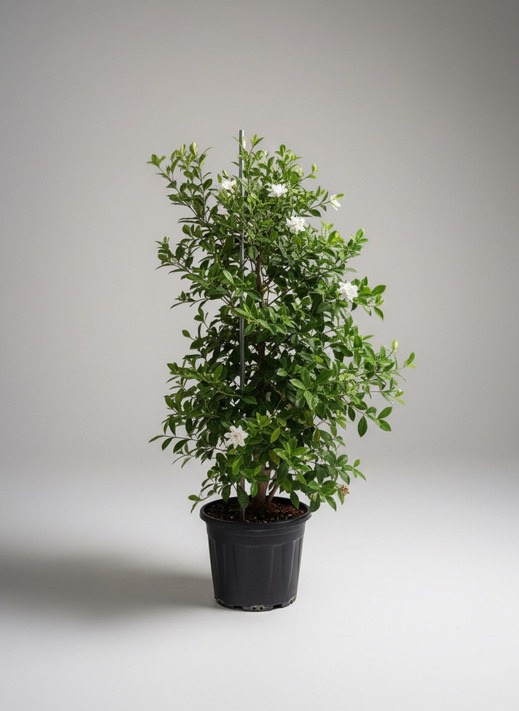
With its glossy dark green leaves and richly scented white flowers that fill the garden in the evening, gardenia (also known as Cape jasmine) is one of the best-loved ornamental plants. Botanically Gardenia jasminoides, this evergreen shrub can be grown successfully outdoors in mild climates and in containers on terraces and balconies.
Gardenia has a reputation for being fussy, but its needs are actually quite clear: acidic soil, consistent moisture, plenty of light without scorching sun, and an environment free from sudden changes. In this guide we explain gardenia care step by step and look at the causes of, and solutions for, the most common problems: yellowing leaves and bud drop.
Features of Gardenia jasminoides
Gardenia is an evergreen shrub native to East Asia. Its leathery, glossy, dark green leaves keep the plant decorative even outside the flowering season. The flowers usually open from early summer; they start white, turn creamy over time and are known for their strong, jasmine-like fragrance.
Because it has a compact, bushy habit, it can be used both as a single specimen in a container and in small groups in the garden. To make the most of its scent, we recommend placing it near seating areas, windows and entrance paths.
- Evergreen, glossy dark green leaves
- Richly scented white flowers in summer
- A good size for terrace, balcony and courtyard containers
- Prefers acidic soil and consistent moisture
Gardenias Outdoors: Site Selection and Planting
The best position for a gardenia is partial shade. Spots that get morning sun and light shade in the afternoon are ideal. Harsh midday sun in midsummer can scorch the leaves, while in deep shade the plant grows weakly and produces fewer flowers.
Gardenias are sensitive to cold winds and frost. So in the garden, choose sheltered corners such as against a wall or in front of a hedge. They can be grown outdoors in mild and coastal climates; in regions with harsh winters it is safer to grow them in containers and move them to a sheltered area during the cold season.
Soil is perhaps the most critical part of gardenia care. The plant needs acidic, well-drained soil rich in organic matter. In chalky or heavy soils, rather than planting directly, dig a wide hole and use a mix made for acid-loving plants or a peat-based blend. After planting, an organic mulch such as pine bark over the root zone retains moisture and helps keep the soil acidity balanced.
Growing Gardenias in Containers
Gardenias are very well suited to container growing and, in mild climates, are an ideal choice for terraces and balconies. Always choose a pot with drainage holes; a drainage layer at the bottom prevents water from collecting. For the growing medium, choose a light, free-draining mix suitable for acid-loving plants, with peat or similar organic content.
Try not to move the pot around often; gardenias are sensitive to changes in their surroundings, and this can lead to bud drop. When the roots fill the pot, you can move the plant into a pot one size larger in spring. You can see our plants in sizes suited to terraces and containers on our gardenia product page.
Watering and Feeding
Gardenias like their soil to stay slightly moist at all times, but they cannot tolerate sitting in water. Water deeply when the top layer of soil starts to dry out, and do not leave water in the saucer. Water needs increase on hot summer days and fall noticeably in winter.
Water quality matters. Hard (limy) tap water gradually reduces soil acidity and makes it harder for the plant to take up nutrients. Use rainwater if possible, or let hard water stand for a while before using it. During the growing season, from spring to late summer, use a fertiliser made for acid-loving plants, following the doses on the label. Stopping feeding in autumn helps the plant prepare for winter.
Gardenia Leaf Yellowing and Bud Drop
The question gardenia owners ask most often is why the leaves turn yellow. Yellowing between the veins while the veins stay green is usually chlorosis caused by iron deficiency. This generally happens not because there is no iron in the soil, but because the plant cannot take it up due to chalky soil or hard water. Effective remedies are maintaining an acidic soil, using rainwater and, if necessary, applying a product containing chelated iron.
General yellowing and dropping of the lower leaves, on the other hand, may point to overwatering, poor drainage or root problems. The occasional yellowing of a few old leaves is a natural renewal process.
Bud drop is another common problem. If buds turn yellow and fall before opening, the usual causes are:
- Irregular watering: the soil alternately drying out and becoming waterlogged
- Sudden temperature changes and cold wind
- Moving the pot around frequently
- Insufficient light or very dry air
- Pests such as aphids, mealybugs, whitefly or spider mites
Pruning, Winter Protection and a Safety Note
Gardenias do not need regular heavy pruning. Do any light pruning to tidy the shape after flowering has finished; pruning in autumn and early winter can reduce the next season’s buds. Removing faded flowers keeps the plant looking well tended.
In winter, cold, dry winds are the biggest danger. Cover the root zone of garden plants with mulch, and move container gardenias to a sheltered spot out of the wind during periods of frost risk. Finally, since gardenia is reported to be mildly toxic to cats and dogs, it is a sensible precaution not to let pets chew the plant.
Frequently Asked Questions
Can gardenias grow outdoors?
Yes, in mild climates they can grow outdoors in partial shade and a position sheltered from wind. In regions with harsh winters it is safer to grow them in containers and move them to a sheltered area during the cold season.
Why do gardenia leaves turn yellow?
Yellowing leaves with green veins are usually iron chlorosis caused by chalky soil or hard water. General yellowing and leaf drop may be linked to overwatering or poor drainage.
Why do gardenia buds fall before opening?
The most common causes are irregular watering, sudden temperature changes, cold wind, frequently moving the pot and insufficient light. Keeping conditions stable greatly reduces the problem.
What soil do gardenias like?
They like acidic soil that is rich in organic matter and holds moisture but drains well. In chalky soils, a mix suitable for acid-loving plants should be used.
At Yalova Güven Fidancılık we grow our Gardenia jasminoides plants on our own nursery grounds in Yalova, in a peat and cocopeat mix, and supply them in CLT 18 (18-litre) pots. For product details visit our gardenia product page, and for other varieties see our Products page. Prices and stock availability are available on request — contact us via WhatsApp or by phone on +90 543 941 88 77.
Yalova Güven Fidancılık
Grown at our own nursery — see forms, pot sizes and heights on the product page.