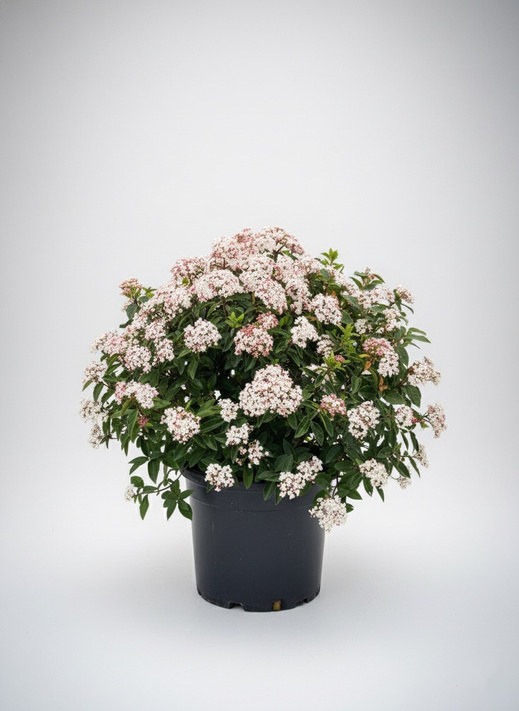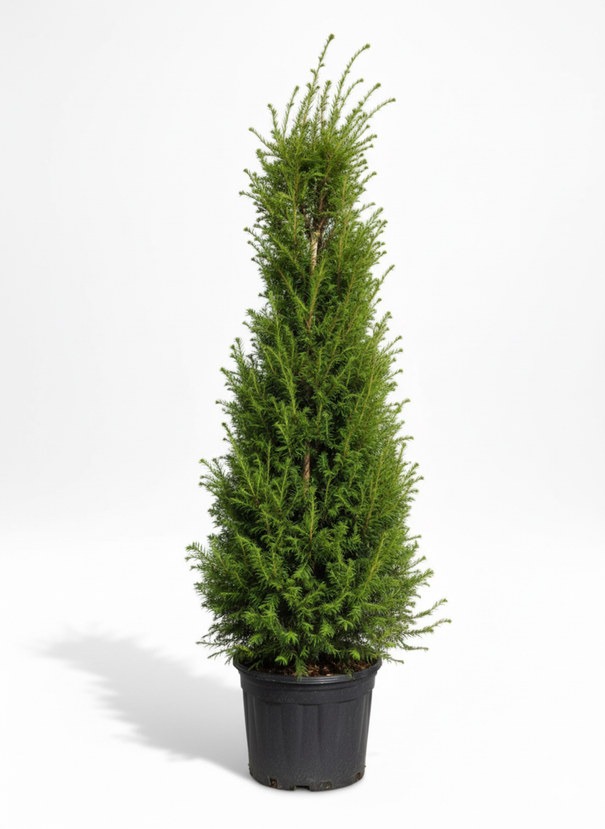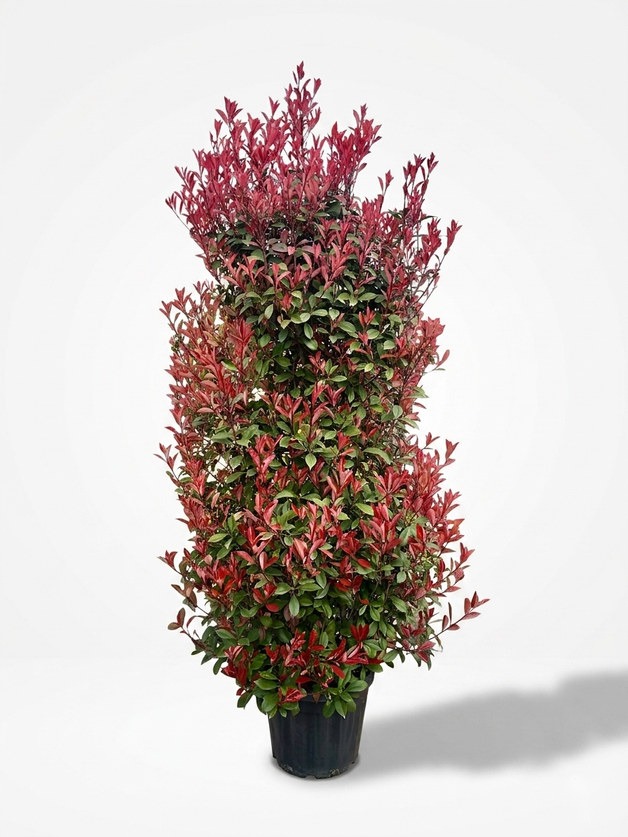
Fraser photinia, widely known as red-tip photinia, is one of the most eye-catching garden plants thanks to the vivid red shoots it produces in spring. Photinia × fraseri ‘Little Red Robin’ is the compact cultivar of this group; it stays smaller than the large hedging types and offers a neat look as a ball or pyramid.
In this guide we look in detail at red-tip photinia care and, in particular, at photinia pruning. Light pruning at the right time ensures that the plant’s best-loved feature, its red new growth, appears again and again.
Features of Photinia × fraseri ‘Little Red Robin’
‘Little Red Robin’ is an evergreen, densely branching, compact shrub. New shoots emerge vivid red, and the leaves turn glossy dark green as they mature. This creates a strong colour contrast on the same plant between the red tips and the dark green body. This colour change repeats with every new flush of growth.
Thanks to its compact growth, it can easily be used in narrow front gardens, in containers and in low hedges. It is moderately cold-hardy; however, as cold, drying winds can damage leaves and shoots, a sheltered position should be chosen.
- Foliage: vivid red new shoots, glossy dark green mature leaves; evergreen
- Light: sun or partial shade
- Soil: moist and well drained
- Position: sheltered from cold wind
- Safety: the leaves and seeds contain compounds that can be harmful if swallowed; do not let pets or young children eat the plant
How to Use Red-Tip Photinia in the Garden
Ball-form red-tip photinia stands out as a red accent in containers and border schemes. Placed among green-leaved shaped plants, it draws the eye to these red points. A pyramid-form Photinia ‘Little Red Robin’, meanwhile, forms a vertical colour element at entrances, in corners and in front of walls.
Grey stone, white walls and light-coloured paving make the red shoots stand out even more. Used together with silver-leaved plants and white-flowered species, it creates a fresh, lively composition.
Planting: Position and Soil Preparation
The red colour of red-tip photinia develops best in sunny positions; it also grows in partial shade, but the colour may be less intense. When choosing a planting site, avoid spots exposed to harsh, cold northerly winds in winter. The shelter provided by a wall, a hedge or other plants is an advantage here.
The plant likes moist but well-drained soil that does not become waterlogged. Dig a planting hole roughly twice the width of the root ball, enrich the soil with well-rotted compost and set the plant at the same level it sat in the pot. Water it in thoroughly after planting; mulch over the root zone helps retain moisture.
To grow it in a container, use a pot with drainage holes that suits the root volume, and a good-quality, free-draining potting mix.
Watering and Feeding
Balanced watering is important in red-tip photinia care. If the soil stays dry, the plant becomes stressed and new shoot growth slows; if it stays constantly wet, root problems can develop. In the first year, water deeply as the soil surface dries out. For established plants, regular watering during hot, dry periods is enough.
Container plants dry out much faster, so they should be checked often in summer. For feeding, a slow-release balanced fertiliser as growth starts in spring is suitable. Stopping feeding from late summer prevents the plant from going into winter with soft, frost-sensitive shoots.
Photinia Pruning: For More Red Shoots
Pruning is the most enjoyable and most effective step in caring for photinia. Because the red colour appears only on new shoots, a light trim encourages the plant to produce new growth and refreshes its colourful look. Rather than occasional hard pruning, several light trims through the growing season preserve both shape and colour better.
The first trim can be done in spring once the risk of frost has passed. When the shoots mature and start turning green, another light trim in early and mid-summer triggers a fresh flush of red growth. On balls and pyramids, keep the outline by removing only the tips that stick out of the shape.
- Use sharp, clean shears; ragged cuts leave the door open to disease
- Each time, cut back only part of the new growth; do not cut into old wood
- On pyramids, keep the base slightly wider than the top so the lower branches get light
- Do not prune after late summer; new shoots will be caught unprepared by winter cold
Winter Protection and Common Problems
In cold regions, especially for container plants, it is a good precaution to move red-tip photinia to a corner out of the wind in winter, wrap the pot and mulch the root zone. Cold wind and frost can cause browning of leaf tips; damaged parts can be cut away in spring.
One of the most common problems in photinia is leaf spot. It starts as reddish or dark spots on the leaves and in severe cases can lead to leaf drop. Collecting diseased leaves, watering the root zone without wetting the foliage and allowing air to circulate between plants reduce the risk. Aphids may appear on young red shoots. If you notice a widespread problem, it is advisable to consult a plant health specialist.
Frequently Asked Questions
When should red-tip photinia be pruned?
The first trim can be done in spring once the risk of frost has passed, followed by light trims in early and mid-summer. Pruning after late summer is not recommended.
Why are the red leaves of my photinia turning green?
This is a natural process: new shoots emerge red and turn dark green as they mature. Light pruning encourages new shoots and renews the red look.
Does Photinia ‘Little Red Robin’ grow in shade?
It can grow in partial shade, but the red colour is at its most vivid in sunny positions.
Can red-tip photinia be grown in a container?
Yes, its compact habit makes it suitable for containers. Use a pot with drainage holes, keep the soil moist without letting water collect, and protect the container in winter in cold regions.
At Yalova Güven Fidancılık we grow Photinia × fraseri ‘Little Red Robin’ on our own nursery grounds in two forms: ball form (CLT 18 and 35 — CLT 18 being an 18-litre pot) and pyramid form (CLT 35 and 70). For product details see our red-tip photinia ‘Little Red Robin’ product page, and for other shaped plants visit our Products page. Prices and stock availability are available on request — contact us via WhatsApp or by phone on +90 543 941 88 77.
Yalova Güven Fidancılık
Grown at our own nursery — see forms, pot sizes and heights on the product page.