For anyone who wants year-round colour in the garden without changing out flowers every season, Loropetalum chinense ‘Fire Dance’ is a very strong choice. Also known as Chinese fringe flower, this shrub stands out in every season with its burgundy-purple foliage, and in spring it puts on a second show as pink, fine, strap-like fringed flowers cover its branches.
In this guide we have brought together the essentials of loropetalum care: why the leaf colour changes, the best planting position, soil preferences, watering, feeding, pruning and winter protection. Our aim is to help you enjoy a healthy, vividly coloured ‘Fire Dance’ for years, whether in a small home garden or a large landscape project.
Features of Loropetalum ‘Fire Dance’
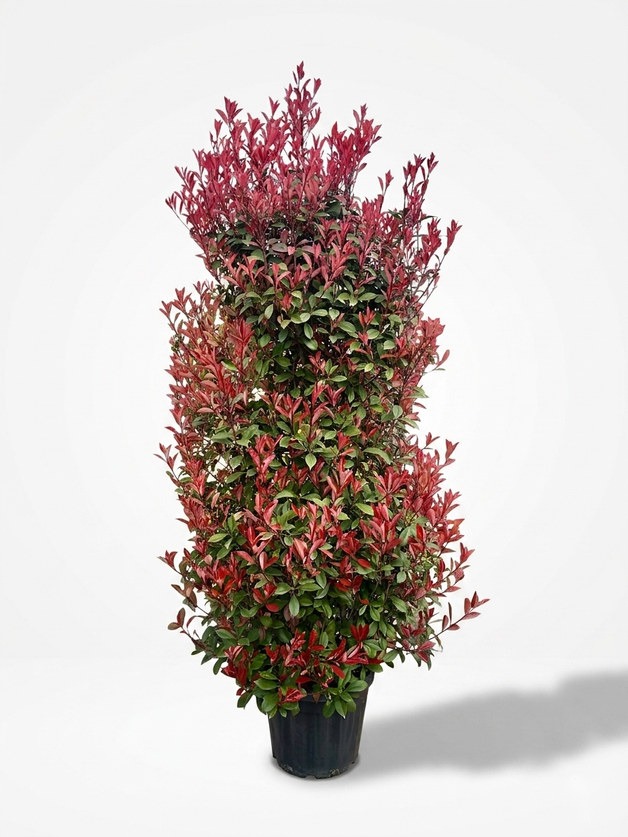
‘Fire Dance’ is a densely branching, evergreen shrub in the witch hazel family (Hamamelidaceae). Its leaves are small, oval and slightly hairy. New shoots show a brighter burgundy-red, while mature leaves take on a deeper purple tone. Having both tones together gives the plant a rich, warm look.
The leaf colour is not fixed; it varies with the season and growing conditions. On plants that get plenty of light, the burgundy-purple tones are more saturated. On plants in too much shade, struggling with summer heat or with an unbalanced nutrient supply, the leaves can shift towards a greenish or brownish tone. This is usually not a sign of disease but a natural response to conditions.
- Foliage: burgundy-purple, with brighter reddish tones on new shoots
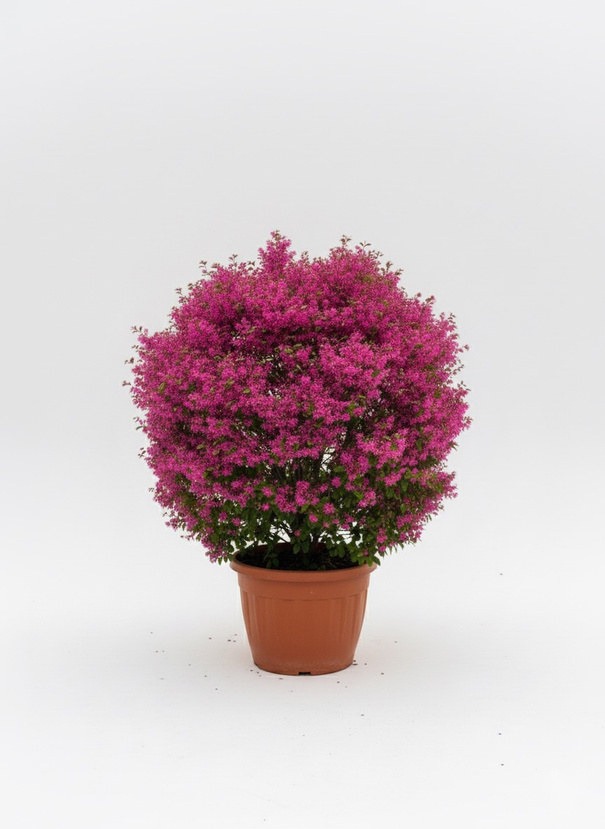
- Flowers: pink, fine, strap-like and fringed, in spring
- Habit: densely branching evergreen shrub, easily shaped by pruning
- Light: sun or partial shade
Using It in Gardens and Landscapes
Its dark foliage makes loropetalum a natural point of contrast in predominantly green gardens. Used next to grey-leaved plants, pale green lawns or yellow-leaved shrubs, the colour difference stands out clearly. It is used successfully for low hedges, boundary planting, foundation planting in front of buildings and as an accent at entrances.
Shaped plants widen the options even further. Pyramids add a vertical accent at entrances and in symmetrical schemes; balls give an orderly look on terraces, in courtyards and in modern landscapes; and standards and rounded forms bring colour to eye level in containers or raised beds. To see which form suits your project, take a look at our Loropetalum ‘Fire Dance’ product page.
Choosing the Right Position and Planting
‘Fire Dance’ grows well in sunny or partially shaded areas. For the most intense leaf colour and the most abundant flowering, choose a spot that gets light for a good part of the day. In hot inland areas, a position partly shielded from harsh afternoon sun can reduce leaf scorch. Planting in a sheltered spot, away from corners exposed to cold winds, significantly reduces winter damage.
Loropetalum likes moist, well-drained soil rich in organic matter, and does best in slightly acidic soil. In chalky and heavy soils, the leaves can turn yellow (chlorosis). In such areas it helps to widen the planting hole and improve the soil with well-rotted compost or peat. In water-retentive clay soils, be sure to improve drainage.
- Dig a planting hole roughly twice the width of the root ball.
- Set the root ball so that its top is level with the surrounding soil; do not bury it deeper.
- Backfill with the improved soil, firm gently and water in thoroughly.
- Spread a 5–7 cm layer of mulch, keeping it clear of the stem.
Watering and Feeding
In the first year after planting, regular watering is important for the root system to establish. Water deeply and generously when the top few centimetres of soil have dried out; avoid frequent, shallow watering. Established plants can withstand short dry spells to a degree, but prolonged drought can lead to leaf drop and loss of colour. Container plants dry out faster, so check them more often in summer. Soil that stays constantly wet harms root health; make sure water does not collect under the pot.
For feeding, a slow-release fertiliser formulated for acid-loving plants in early spring is enough. Fertiliser that is too high in nitrogen can shift the leaves towards green and weaken flowering. Do not feed from late summer onwards; soft shoots formed late in the season go into winter unprepared.
Pruning and Maintaining the Form
Loropetalum forms its flower buds on the previous year’s shoots. So the best time for the main pruning is immediately after spring flowering has finished. Hard pruning in autumn or late winter can reduce the following spring’s flowers.
For pyramid and ball forms, the aim is to regularly shorten shoots that stick out beyond the shape. One main shaping a year plus a few light touch-ups during the growing season is usually enough. On standards, remove shoots from the trunk and the root collar as soon as you see them; this keeps the crown balanced. Dead, broken or inward-growing branches can be removed in any season.
Winter Protection and Common Problems
‘Fire Dance’ is moderately cold-hardy. In mild coastal climates it usually overwinters without trouble; in harsh continental climates it should be planted in a sheltered position and supported with a cover or windbreak during severe cold. Because the roots of container plants are more affected than those in the ground, moving pots to sheltered spots such as against a wall during the cold season is a good precaution.
The most common problems usually stem from growing conditions. Yellowing leaves are mostly due to chalky soil or difficulty taking up iron; fading colour to insufficient light; and browning leaf tips to drought, cold wind or excessive sun. Waterlogging sets the stage for root rot. In most cases, finding and correcting the cause in the plant’s environment is enough for it to recover.
Frequently Asked Questions
Why are my loropetalum leaves turning green?
The most common cause is insufficient light. Summer heat, fertiliser too high in nitrogen and ageing leaves can also shift the colour towards green. Moving the plant to a brighter spot and balancing feeding usually brings back the burgundy-purple colour on new shoots.
When does Loropetalum ‘Fire Dance’ flower?
The main flowering is in spring, when pink, strap-like fringed flowers cover the branches. Depending on conditions, sparser second flushes may also appear later in the year.
Can loropetalum be grown in a container?
Yes. It grows successfully in a container with drainage holes, wide enough for the root ball, using a slightly acidic, well-drained potting mix. Container plants need more watering and should be moved to a more sheltered spot in winter.
Is loropetalum evergreen?
In mild conditions it keeps its leaves through winter. In very cold winters or in spots exposed to cold wind, some leaf loss can occur; the plant usually reshoots in spring.
At Yalova Güven Fidancılık, Loropetalum ‘Fire Dance’ is grown on our own nursery grounds in a range of forms: 150–180 cm pyramids in CLT 35 and CLT 55 pots (CLT 35 being a 35-litre pot); 80–110 cm balls in CLT 35 pots and 120–180 cm balls in CLT 110 pots; and 40–100 cm standards and rounded forms in CLT 5 and CLT 35 pots. You can browse our other plants on our Products page. Prices and stock availability are available on request — contact us via WhatsApp or by phone on +90 543 941 88 77.
Yalova Güven Fidancılık
Grown at our own nursery — see forms, pot sizes and heights on the product page.